

Your guide to COPD lung tests
Before you were diagnosed with COPD, you likely had some tests to measure lung function. These tests don’t stop after diagnosis. Ongoing screenings help track your progress and adjust treatment when needed, which may prevent flare-ups. Here’s what their results can reveal about your health.
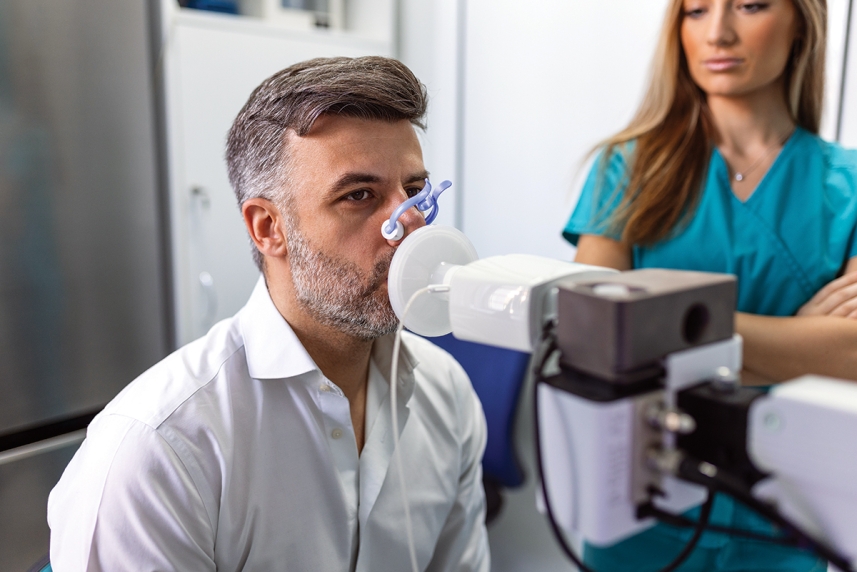
Pulmonary function tests
Spirometry: You blow into a device that measures the volume and speed of an exhale. Results help gauge COPD severity and guide treatment.
Peak flow: This handheld device measures how fast you can blow air out. It’s less specific than spirometry but useful for at-home tracking.
Imaging tests
These help figure out the cause of a flare-up:
X-rays help identify pneumonia or bronchitis. CT scans reveal more detailed changes to the lungs.

Medications Your Way
Lab tests
Pulse oximetry: A small sensor on your finger gives a quick oxygen reading.
Arterial blood gas test: Blood taken from an artery measures how well your lungs pull oxygen in and push carbon dioxide out.
Exercise tests
Cardiopulmonary exercise test (CPET): Doctors monitor heart rate, blood pressure, and oxygen while you use a treadmill.
6-minute walk test: It tracks walking distance while measuring oxygen levels.