

3 tips to breathe easier at night
Many adults with COPD have trouble sleeping. Here are three strategies to help you fall — and stay — asleep.
You deserve a good night’s rest, but COPD can sometimes make it tough. For one, your chest muscles have to work harder when you’re lying down. Plus, lying flat can make it more difficult to clear mucus.
Sleep apnea and certain medications, including steroids, can also affect sleep quality. But while there are some challenges, there’s also a lot you can do to start sleeping better tonight.
Try a new sleep position
Sleeping on your side instead of your back or stomach can help.
You can also try raising your upper body with a few extra pillows so it’s easier to stay upright.
Make your bedroom sleep-friendly
A cool, dark, and quiet room can help you sleep better. Try to keep furry friends out of the room, and consider using an air purifier to help manage triggers like smoke or strong smells.

Medications Your Way
Ask about CPAP or BiPAP machines
Signs of sleep apnea include loud snoring, waking up gasping for air, or feeling very sleepy during the day. If these symptoms sound familiar, talk to your physician.
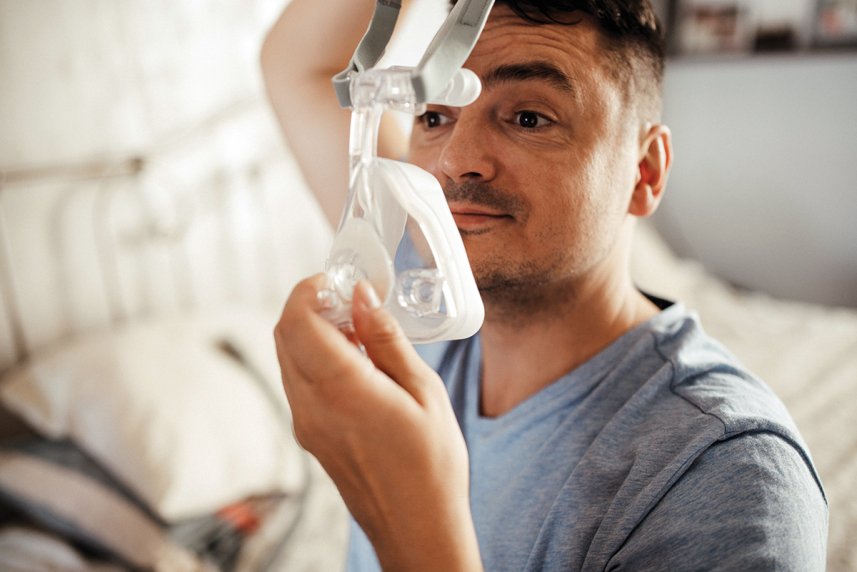
CPAP and BiPAP devices use gentle air pressure to help keep your airways open while you sleep. Many people feel more rested when using them.
When to loop in your care team
New breathing problems at night? Worsening symptoms any time? You know what to do — make the call.