

Why adults need their shots, too
Are you up to date on all the vaccines you need? There’s a good chance you’re not. Here’s what to know to help you stay healthy.
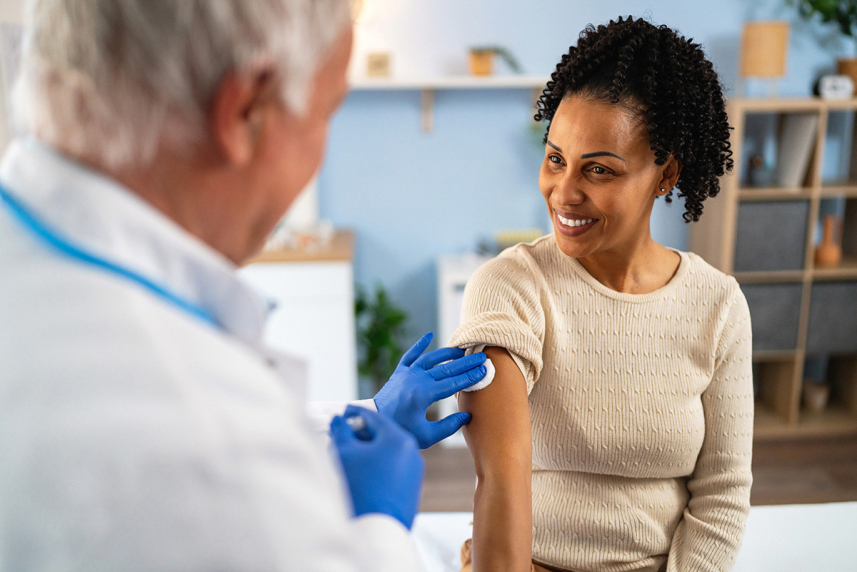
When you visit your physician as a child, vaccines are usually part of the conversation. But for adults, they can slip under the radar. In fact, only about 1 in 5 adults is fully up to date on vaccines.
Staying current on important vaccines should be simple. Still, many adults delay or skip recommended shots, including those that protect against pneumonia, COVID, and the flu. For some, busy schedules get in the way. Others may not fully understand how vaccines work or why they matter.
Below are answers to common questions about vaccines in adulthood, along with information about shots to discuss with your physician.
I had vaccines when I was a kid. Why do I need more now?
There are three key reasons adults should review their immunization history with a physician:
- Vaccine protection can wear off over time. Immunity from some childhood vaccines decreases with age, which means booster shots may be needed to stay protected.
- Adults need different vaccines than children. As the body changes over time, protection may be needed against diseases that were not a concern earlier in life.
- Vaccines are updated to fight new strains. Viruses can change over time. Vaccines for illnesses like the flu and COVID are updated regularly to help protect against newer types.
Is natural immunity better than immunity from vaccines?
Both natural immunity and vaccines help the body learn how to fight off germs. However, relying on natural immunity alone comes with risks.
Natural immunity develops after getting sick. That means the illness must happen first, which can be dangerous. For example, shingles can lead to chronic nerve pain, and hepatitis B can increase the risk of liver cancer.

Say Goodbye To Dinnertime Stress
Can herd immunity protect me instead?
Not always. Herd immunity happens when enough people in a community are immune — through vaccination or past infection — so a disease does not spread easily. However, herd immunity can be affected by virus mutations, people not knowing they are infected, or germs that exist in nature.
Outbreaks can also occur when vaccination rates drop.
Measles, for example, was declared eliminated in the U.S. in 2000. As of spring 2026, there were more than 1,700 cases nationwide, including nearly 130 in Florida. This shows how quickly diseases can return without strong community protection.
What vaccines do adults need?
A physician is the best person to answer this question, especially if you missed some vaccines earlier in life. During your annual physical, your doctor can review your records and recommend needed vaccines based on your age and risk factors. These may include:
- Chickenpox or shingles
- Human papillomavirus (HPV)
- Hepatitis A and B
- Tetanus, diphtheria, pertussis (whooping cough)
- Certain illnesses based on travel plans
If you’ve had a past reaction to vaccines, your physician can help decide next steps.
In general, the Centers for Disease Control and Prevention recommends several vaccines for adults. Some, like the flu shot, are needed every year. Others may only be needed once. Before scheduling your appointment, check that the provider is in-network by logging in to your AvMed member portal.
Flu shot
What is it?
This vaccine protects against the flu and related complications. While the flu is sometimes mistaken for a bad cold, symptoms are often more severe. Fever, body aches and congestion are common. The flu can also lead to other infections, such as sinus infections, ear infections, or pneumonia. In some cases, it can affect the heart or brain.
When you need it:
A flu shot is recommended every year because the virus changes quickly. It is usually available starting in August. Even if the season has already started, it is still helpful to get vaccinated, as flu season can last through May.
Updated COVID vaccine
What is it?
This vaccine helps prevent serious illness from COVID.
When you need it:
The CDC recommends this year's COVID vaccines for people ages 6 months and older, based on individual decision-making.
Tdap vaccine
What is it?
This vaccine protects against three serious diseases: Tetanus, diphtheria and pertussis.
Tetanus can enter the body through cuts or wounds and causes painful muscle stiffness. Diphtheria and pertussis spread from person to person. Diphtheria can lead to breathing and heart problems and can be life threatening. Pertussis, also known as whooping cough, causes severe coughing fits that make breathing and eating difficult. Babies are especially vulnerable because they cannot be vaccinated until 2 months of age. That's why it's important for the adults around them to be protected.
When you need it:
Adults who have never received a Tdap shot should talk with a physician about getting one. After that, a booster is needed every 10 years.
Shingles vaccine
What is it?
This vaccine protects against the varicella-zoster virus, which also causes chickenpox. After a chickenpox infection, the virus can remain inactive in the body. Later in life, it may reactivate and cause shingles.
Shingles often causes a painful rash on one side of the face or body. Blisters, numbness and sharp pain can also occur.
When you need it:
The shingles vaccine is recommended at age 50 or older. While a chickenpox vaccine came about in 1995, most adults already carry the virus that can lead to shingles.
Pneumonia (pneumococcal) vaccine
What is it?
This vaccine protects against pneumococcal disease. Pneumonia is the most common illness caused by these bacteria, but it can also lead to meningitis, blood infections, and ear infections.
When you need it:
The CDC recommends all adults age 50 and older receive the pneumonia vaccine. Adults under 50 with certain chronic conditions may need it earlier. Your physician can help determine the right timing.
The bottom line: Vaccines are an important way to stay healthy and prevent serious illness. Recommendations can vary based on age, location, community outbreaks and travel plans. Talking with a physician is the best way to know which vaccines are right for you.
See our sources:
Adult vaccine stats: The Centers for Disease Control and Prevention
Natural immunity: The Cleveland Clinic
Herd immunity: The Cleveland Clinic
Measles stats: The Centers for Disease Control and Prevention
Flu shot: The Centers for Disease Control and Prevention
COVID-19 vaccine: The Centers for Disease Control and Prevention
Tdap: The Centers for Disease Control and Prevention
Shingles vaccine: The Centers for Disease Control and Prevention
Pneumococcal vaccine: The Centers for Disease Control and Prevention