

Make the most of your daily walk
Put a little pep in your step with these expert-approved tips for turning an ordinary walk into a feel-good fitness routine.
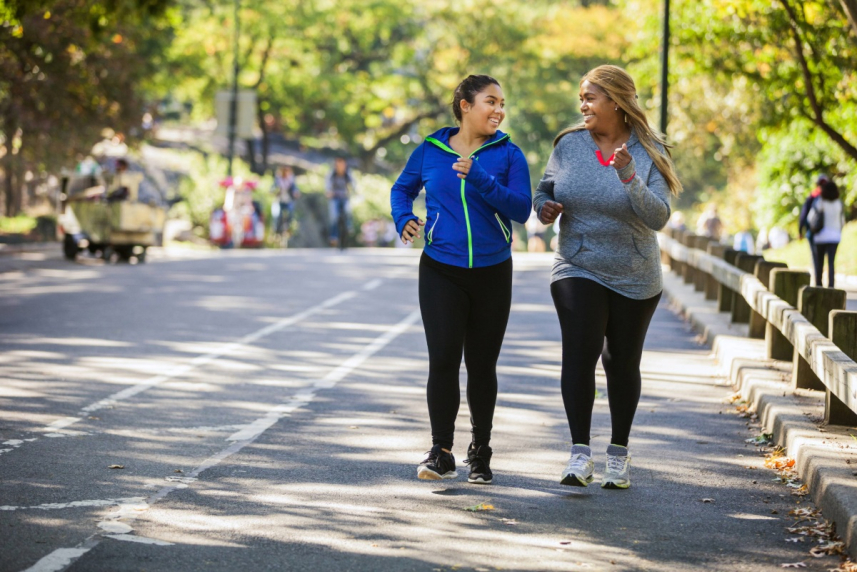
Perhaps today’s the day you’ve decided to start exercising. Congratulations! You’re in the right place. Deciding to work out is half the battle. And here’s the thing: You don’t need a gym membership or fancy equipment to exercise. All you need to do is walk.
That’s right. Walking is one of the most effective ways to get the recommended amount of exercise. The American Heart Association recommends at least 150 minutes of moderate-intensity aerobic activity each week.
Don’t worry if you can’t make it around the block just yet. “Walking can be a way of building up strength and fitness,” says Michele Stanten, a fitness consultant at Harvard Health Publishing and author of Walk Off Weight.
The other great thing about walking: You can do it on your own time. This is part of what makes it sustainable in the long run.
Ready to get moving? As with any new fitness routine, be sure to talk to your physician before you begin. Then try out these pro tips from Stanten.
Tip #1: Start small
If you’re just getting started, the most important thing is to build a consistent habit, Stanten explains. Start with 5 to 10 minutes a day, at a time you can regularly commit to.
“Get out there every day so you get into that habit, so it becomes something you want to do,” Stanten says. Each week, add another five minutes, until you reach your goal of 30 minutes of walking a day.
If you’re not sure how to fit a walk into your daily schedule, you can break up the 30 minutes: 10 minutes in the morning, 10 in the afternoon, and 10 in the evening. As motivation, you could try creating a walking group with friends or coworkers. Prefer to walk indoors? Log in or sign up for Active&Fit Direct® to access thousands of fitness centers nationwide.
Tip #2: Focus on good form
Proper form is the secret to transforming an ordinary walk into a workout, Stanten says. Here’s what that looks like:
- Walk tall. Your shoulders should line up under your ears. One trick that helps is to roll your shoulders up, back, and down as you begin your walk.
- Draw your belly muscles up and in. Fitness experts call this “engaging your core,” and it helps to support your spine as you walk.
- Step heel-ball-toe. Landing on your heel and rolling through to your toes helps you stay stable while walking.
- Look up. Watching your feet can set you up for a tumble. Plus, a downward gaze throws off your posture. Instead, you want to look about 10 to 15 feet in front of you as you move. Keeping your eyes on the path ahead can help you spot and avoid tripping hazards before they cause an injury.

Medications Your Way
Tip #3: Add time or distance
When you first start walking, chances are you’ll begin to notice changes in your fitness level. You’re literally stepping out of your comfort zone. Over time, your body will adjust to the new routine, and you may not feel the physical effects as easily.
To continue to improve, it’s important to keep doing a little bit more. “It’s all about interval training,” Stanten says.
The word “interval” may sound like something you use for sprinting around a track, but don’t worry—It’s beginner friendly. When you do intervals, you alternate between increasing your effort and slowing down. Interval training ups the difficulty of walking and transforms it into a more intensive exercise.
Start by sticking to the 1:2 rule. For every interval of increased intensity, spend twice as much time walking at your starting pace. Stanten suggests planning your interval training around time or distance challenges. Here’s an example of each:
Time intervals:
- Warm-up: 5 minutes at an easy, comfortable pace
- Challenge: 30 seconds as fast as you can
- Rest: 60 seconds at your starting pace
Continue for 30 minutes or until the end of your walk.
Distance intervals:
- Warm-up: 5 minutes at an easy, comfortable pace
- Challenge: 1 block as fast as you can
- Rest: 2 blocks at your starting pace
Continue for 30 minutes or until the end of your walk.
Tip #4: Adjust your stride—and your mindset
During the challenge portion of your intervals, you’ll want to adjust your stride, Stanten says. Think: Short, quick steps.
“I like to encourage people to think in terms of being really late for an appointment. Walk as fast as you can to catch that appointment,” Stanten says.
Another way to think about this is playing an imaginary game of catchup. “If you’re out walking, pick a person ahead of you and try to catch up with them,” Stanten explains.
If you live in a hilly area, you can use the hills for your challenge intervals. Try to maintain your starting pace as you walk uphill, and don’t get discouraged if you’re breathing a little harder. With exercise, activities that challenge your breathing can help improve your fitness level, Stanten notes.
Tip #5: Leave the weights at home
You’ve probably seen pictures of people walking with hand weights. And maybe you’re wondering if that’s a good idea. Stanten does not believe they’re the best way to raise the difficulty of your routine. Carrying weights when you walk can cause unnecessary stress on your shoulders and increase the risk of injury.
Instead, further challenge yourself by speeding up or walking for longer. You’ll burn more calories going faster than you will by holding weights, Stanten says. If you want to add in strength training, lift weights at a separate time so you can focus on form.
All in all, walking is a great way to start—and maintain—a fitness routine. You can work it into your existing schedule, break it up throughout the day, and even use it as a social activity. Plus, it’s simple to boost the intensity when you’re ready to push yourself further.
Meet the expert: Michele Stanten is a fitness consultant at Harvard Health Publishing and author of Walk Off Weight.
See our sources:
Weekly exercise recommendations: American Heart Association
Benefits of walking: Mayo Clinic