

Is a continuous glucose monitor right for me?
Checking your blood sugar is an important part of your day — but it doesn’t have to take over your life. CGMs are making it easier for some people to stay on track.
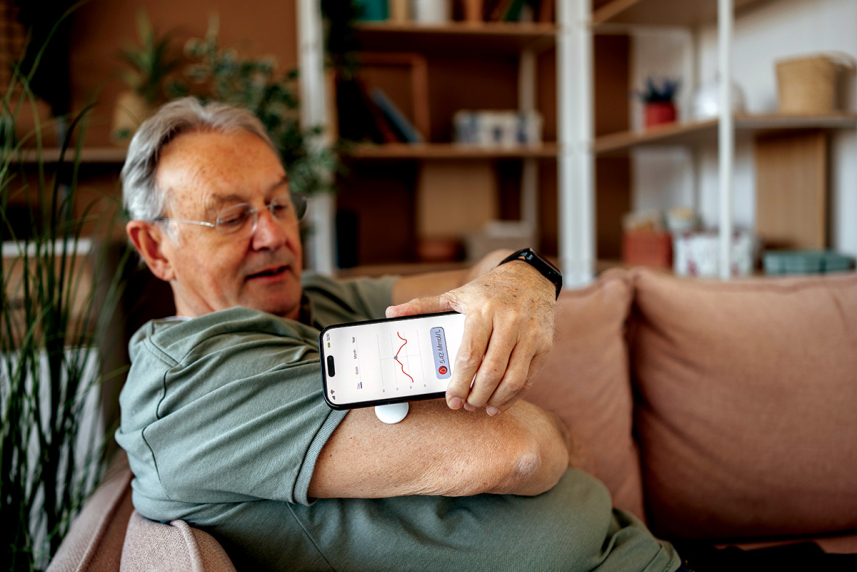
Continuous glucose monitors (CGMs) are medical devices that help track your blood sugar during the day and at night. They use a tiny sensor placed under the skin, often on the arm or stomach. The sensor measures your blood sugar every few minutes and sends the numbers to a smart phone or reader.
How is it different from finger-stick testing?
CGMs continuously monitor your glucose levels so you always know your results. Many people think once they start using a CGM they’ll never have to do fingersticks again. But it’s important to still occasionally check your blood sugar with a fingerstick to ensure your CGM is accurate. This is especially true if you’re new to using a CGM or newly diagnosed with diabetes. Ask your care team how often to perform fingersticks.
Who can benefit?
You may benefit from using a CGM if you:
Check your blood sugar levels often with a glucometer
- Use an insulin pump
- Use insulin several times a day
- Want to better understand your blood sugar patterns
- Have trouble noticing signs of low blood sugar
Your physician can help decide if a CGM is right for you.

Medications Your Way
See our sources:
What are CGMs: American Diabetes Association
CGMs vs fingerstick testing: Centers for Disease Control and Prevention